Exploring Adaptations in Ms. Hutson’s 5th Grade Science Class
- Apr 10
- 2 min read

In Mrs. Hutson’s 5th-grade science class, students recently dove into an engaging, hands-on lesson designed to bring the concept of adaptations to life.
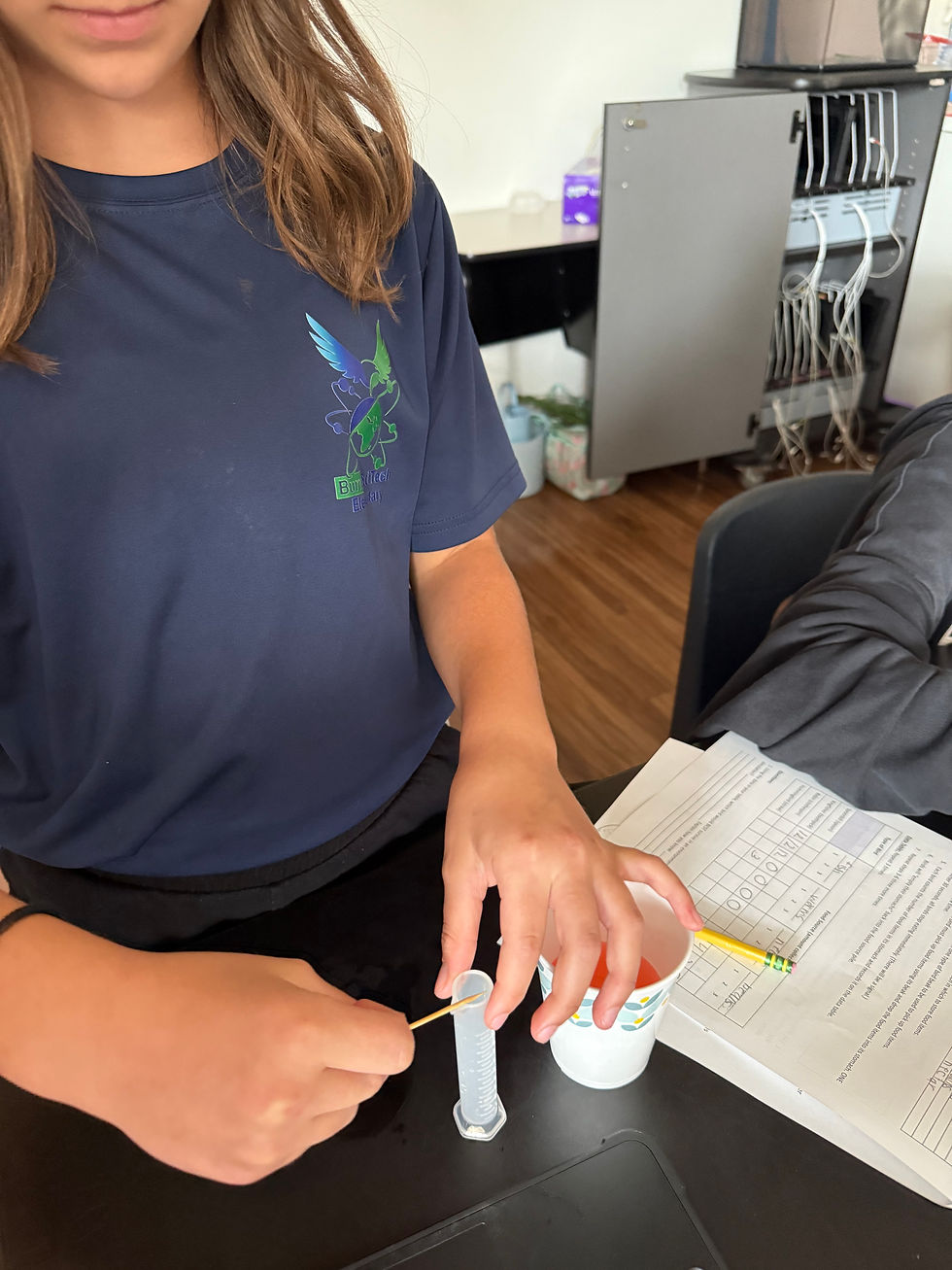
Through a fun and interactive simulation, students explored how different bird beaks are specially designed to help birds survive in their environments.
The class investigated four unique birds: the spoonbill, the robin, the kingfisher, and the hummingbird. Each of these birds has a beak perfectly suited for the type of food it eats.
To simulate these adaptations, students used everyday classroom materials such as toothpicks, spoons, clothespins, pens, and straws. Each tool represented a different type of bird beak. Students then attempted to “hunt” for various types of food, discovering firsthand which tools were most effective for certain tasks.
Learning Through Discovery
This activity allowed students to move beyond reading about science and instead experience it in action. As they tested each “beak,” students quickly realized that not all tools worked the same way. Some were better for picking up small items, while others were more effective for scooping or reaching.
This hands-on approach helped students understand an important scientific concept: Adaptations are essential for survival.
They learned that:
A spoonbill’s wide, flat beak is ideal for sweeping through water to catch small organisms
A robin’s pointed beak is perfect for pulling worms from the ground
A kingfisher’s sharp, strong beak helps it catch fish
A hummingbird’s long, slender beak allows it to reach nectar deep inside flowers
A Special Classroom Visitor

Adding to the excitement, Mrs. Hutson’s class has welcomed a special visitor during this unit a bunting bird that has been stopping by the classroom daily.
Buntings are small, colorful songbirds known for their vibrant feathers and cheerful songs. In Florida, species like the painted bunting are especially eye-catching, with bright blues, greens, and reds. These birds primarily eat seeds and insects, using their short, strong beaks to crack open food.
Having a real bird nearby has helped students make authentic connections between what they are learning in class and the natural world around them.
Why This Lesson Matters
Lessons like this go far beyond science standards. They help students:
Develop critical thinking and problem-solving skills
Engage in hands-on, experiential learning
Make real-world connections between classroom content and nature
Build curiosity and a deeper appreciation for the environment
By actively participating in the learning process, students are more likely to retain information and develop a lasting interest in science.
Building Future Scientists
At Burns, learning is about more than memorizing facts it’s about exploring, discovering, and making connections. Mrs. Hutson’s classroom is a perfect example of how creative, hands-on instruction can inspire students and bring science to life.
Who knows? This lesson may have sparked the curiosity of a future scientist, ornithologist, or environmentalist right here in 5th grade!
Bird Adaptations 2026