Welcome to the Bat Cave! Second Grade Takes Learning to New Heights

Who knew learning about bats could be this exciting? This week, our second-grade students stepped into a whole new world as their hallways and classrooms became a real-life bat cave!
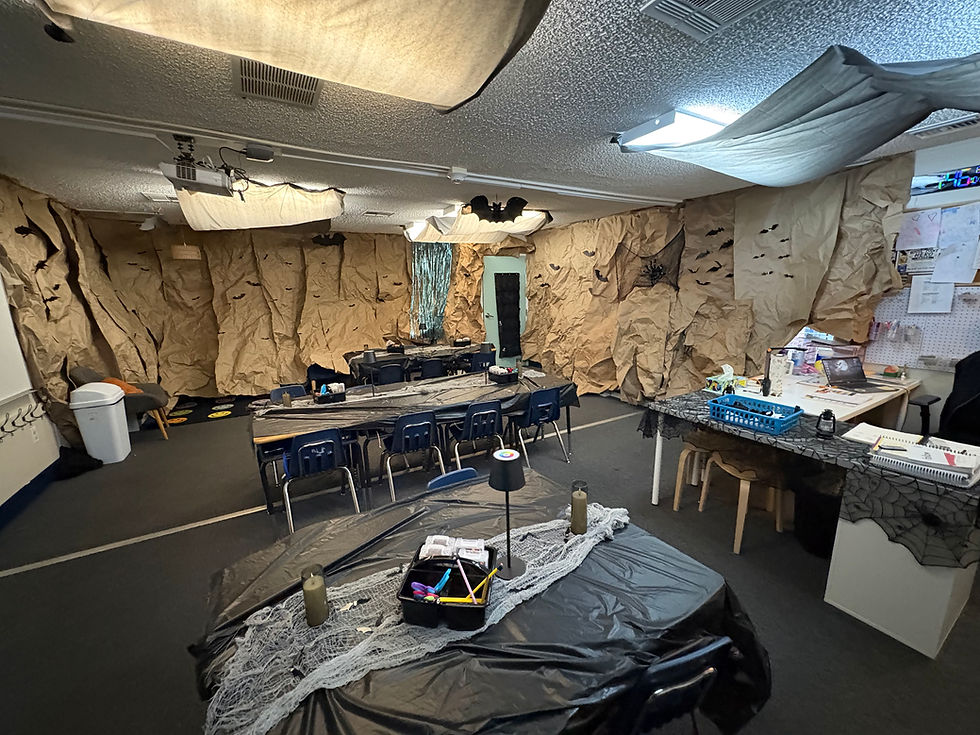
From the moment students entered their darkened learning spaces, they were immersed in an environment designed to bring their lessons to life.
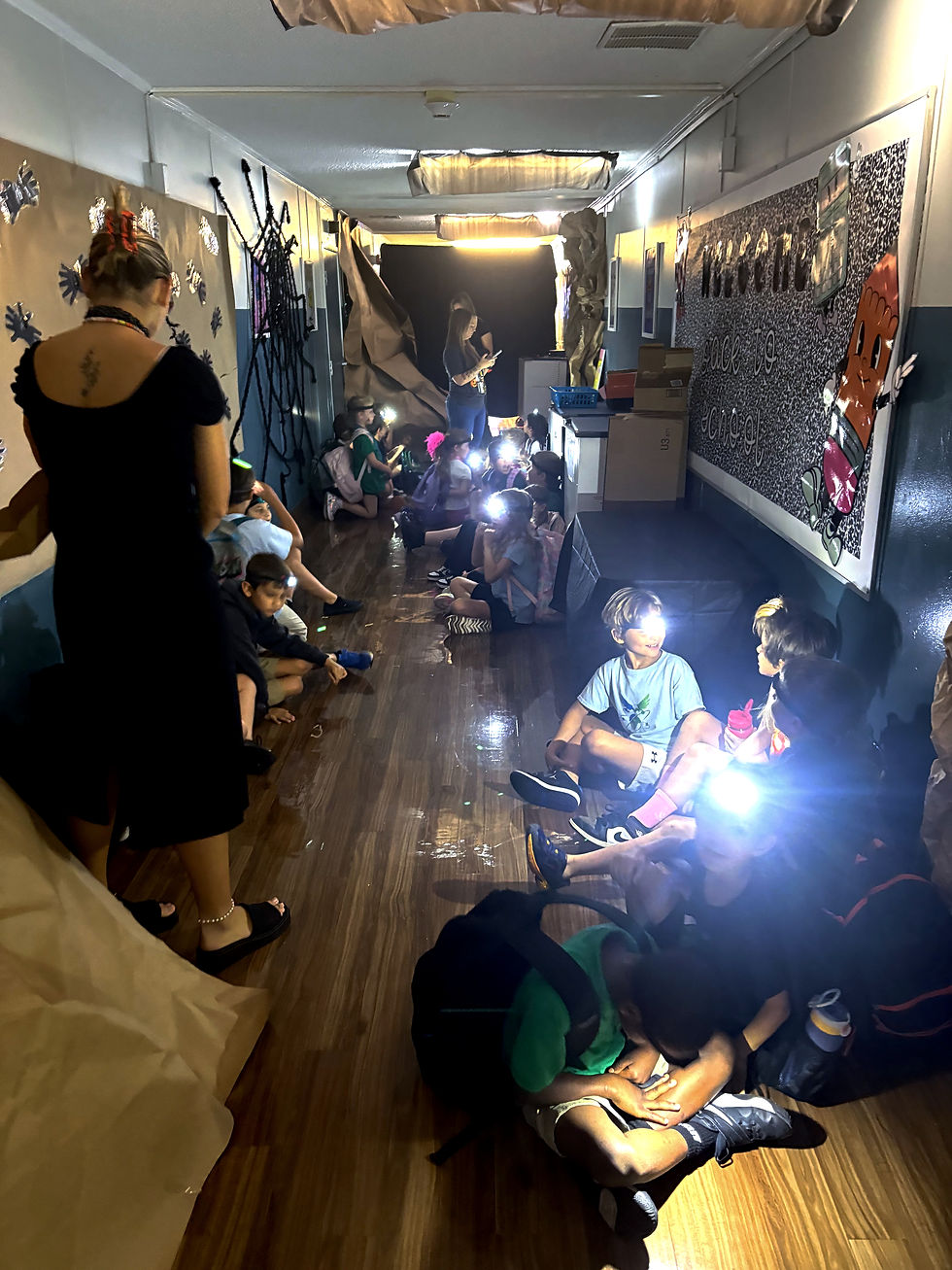
Equipped with headlamps, our young explorers eagerly navigated their bat cave, ready to discover the fascinating world of these incredible nighttime creatures. The excitement was contagious as students explored their surroundings, asked questions, and learned about the animals that make the night sky their home.
Learning Comes to Life in the Bat Cave!
This wasn't just a classroom decoration project; it was an opportunity for students to experience science in a whole new way. By transforming their learning environment, our second-grade teachers created an immersive experience that encouraged curiosity, exploration, and discovery.

As students learned about bats and their habitats, they discovered some fascinating facts:
Bats are the only mammals capable of true, sustained flight! While other mammals can glide, bats are the only ones that can truly fly.
Many bats send out high-pitched sounds and listen for the echoes that bounce back, helping them locate insects and avoid obstacles.
Bats are important to our environment. Many bats eat insects, helping control insect populations. Other bat species help pollinate flowers and spread seeds, supporting healthy ecosystems.
These discoveries helped students understand that bats are much more than spooky creatures associated with Halloween. They play an important role in keeping ecosystems healthy!
Headlamps, Exploration, and Lots of Excitement!

One of the highlights of the experience is getting to wear headlamps as students explored their transformed classrooms and hallways. Suddenly, learning about a nocturnal animal became an adventure of their own!
The dimly lit spaces and cave-inspired surroundings helped students imagine what it might be like to explore a bat's habitat. Their enthusiasm and curiosity made this hands-on experience especially memorable, allowing them to connect what they were learning to the world around them.
Experiences like this remind us that learning can be so much more than reading a textbook or completing a worksheet. When students can see, explore, question, and experience a concept, they have the opportunity to develop a deeper understanding of what they're learning.
Learning Is an Adventure!
Our second-grade bat cave is another example of how our teachers bring learning to life through creativity, hands-on exploration, and engaging classroom experiences.
By combining science with imagination, our educators created an environment where students could explore the natural world, develop a greater appreciation for wildlife, and discover just how exciting learning can be.
A huge thank-you to our second-grade teachers for creating such a memorable experience for our students!
Who knew a trip to the bat cave could be such a fang-tastic learning adventure?
The Bat Cave 2026: